



By using our website, you agree to the use of cookies as described in our Cookie Policy
Can You Learn to Wake Surf in One Session?
Wake surfing looks deceptively easy from the dock. You watch someone glide behind the boat, carving and spinning like gravity took a day off. Then you hop in, grab the rope, and realize there's a massive gap between watching and doing. Your legs wobble. Your balance betrays you. And the wake? It's less forgiving than it looked.
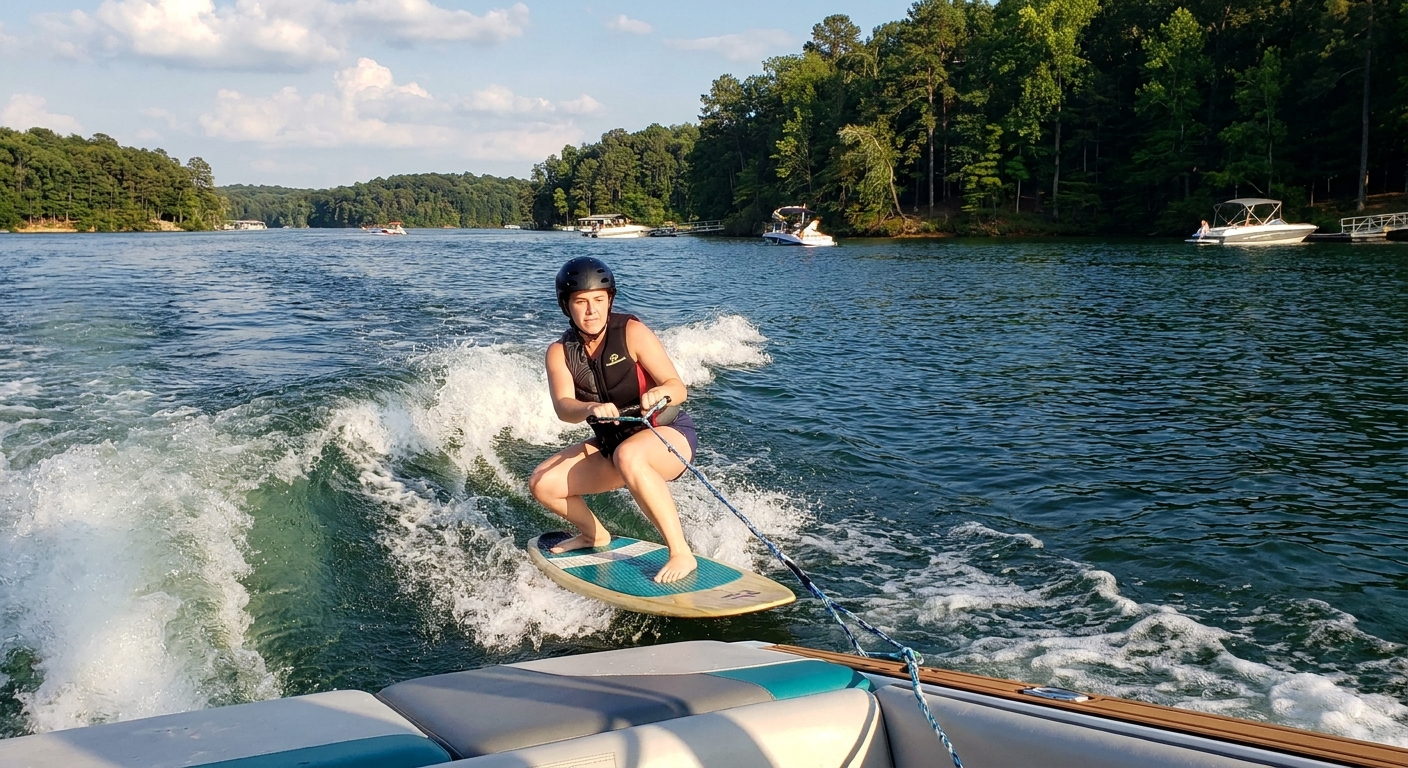
But here's the thing—most riders do get up on their first try. Not perfectly. Not gracefully. But they stand. They ride. They eat it hard a few times and come back grinning. So yes, you can learn the basics in one session. Just don't confuse getting up with getting good. There's a difference between riding a wake and owning it.
Getting Up Is One Thing, Staying Up Is Another
The first challenge isn't balance—it's timing. You're holding a rope, crouched low, waiting for the boat to pull. Your board is angled wrong. Your weight shifts too far forward. The rope slips. You faceplant. Rinse and repeat until something clicks.
Once you figure out how to let the boat do the work instead of fighting it, standing becomes possible. Most beginners nail this within three to five attempts. But staying vertical long enough to let go of the rope? That's where the session separates hopefuls from actual riders. You need core strength, foot placement, and enough calm to stop overthinking every wobble.
Proven Methods That Get First-Timers Up Every Time
At BlueWater Performance, we've never failed to get a first-time surfer or water skier up on the water. That's not luck—it's years of experience distilled into simplified teaching methods that actually work. We adjust our techniques based on each person's individual capabilities, whether you're a natural athlete or someone who's never set foot on a board.
Everyone learns differently. Some people need more time in the water before attempting to stand. Others pick it up after watching a quick demonstration. We read how you're responding and shift our approach on the fly, so you're never stuck repeating the same mistake without understanding why.
What Prior Experience Actually Buys You
If you've spent time on a skateboard, snowboard, or surfboard, you're already ahead. Your body understands weight distribution. You know how to read movement beneath your feet. That muscle memory translates faster than you'd think.
Here's how different backgrounds stack up:
- Surfing experience: You already know how to read a wave and shift your weight mid-ride, which gives you a serious edge when the wake starts pushing back.
- Skateboarding or snowboarding: Board control and stance awareness carry over cleanly, especially when it comes to carving and staying centered.
- Wakeboarding: You're used to being towed and managing speed, but wake surfing requires a softer touch and less aggression.
- Zero board sports background: You'll fall more at first, but plenty of complete beginners get up within their first session if they stay patient and listen to feedback.
The Boat and Board Setup Matters More Than You Think
Not all wake surf setups are beginner-friendly. If the boat's wake is choppy or the board is too small, you're making it harder on yourself before you even start. A surf-specific boat with ballast creates a clean, consistent wave that gives you room to learn without fighting turbulence.
The board itself plays a huge role. Bigger boards offer more stability. Shorter boards turn faster but demand better balance. If you're brand new, grab something with surface area and forgiveness built in. Save the aggressive shapes for later.
What a Solid First Session Looks Like
Most instructors or experienced friends will walk you through the same sequence. You'll start on land, practicing your stance and visualizing the pull. Then you'll move into the water, work through a few failed attempts, and eventually find your footing. If things go well, you'll ride the wake for a few seconds, maybe even let go of the rope.
Here's what realistic progress looks like in one session:
- Getting pulled up without immediately crashing: This alone is a win. It means you've figured out the rope tension and body position.
- Riding for a few seconds while holding the rope: You're balancing, adjusting, and starting to feel the wave underneath you.
- Letting go of the rope briefly: This is the breakthrough moment. You're officially wake surfing, even if it's just for a heartbeat.
- Managing a couple of directional shifts: If you can lean into the wake or away from it without bailing, you're beyond beginner territory.
- Falling with control: Knowing how to fall without panic or injury is part of the learning curve and shows you're adapting.
The Mistakes That Slow Everyone Down
Beginners tend to make the same handful of errors, and most of them are mental. Overthinking your stance, gripping the rope too hard, or leaning back when you should stay neutral—these habits cost you ride time and drain your confidence.
Here's where most people trip up:
- Pulling on the rope instead of letting it pull you: The boat does the work. Your job is to stay low and let momentum build naturally.
- Looking down at your feet: Your head leads your body. Look at the horizon, not the board, and your balance will follow.
- Locking your knees: Stiff legs kill your ability to absorb movement. Stay loose and let your joints do their job.
- Starting with the wrong foot forward: If your stance feels off, swap your lead foot. Riding goofy or regular makes a bigger difference than most people realize.
- Giving up after two falls: Wake surfing has a learning curve. If you bail after a couple attempts, you're quitting right before the breakthrough.
Fitness and Fatigue Hit Faster Than Expected
Wake surfing doesn't look exhausting until you're in the water. Your core, legs, and stabilizer muscles are firing nonstop. After a few attempts, your arms burn from holding the rope. Your legs shake from the constant adjustment. And if you're not used to being in the water, the resistance alone will wear you down.
Most first-timers can handle 30 to 45 minutes of active attempts before fatigue sets in. Push past that and your form falls apart. You stop listening to feedback. You start muscling through instead of moving with the wake. Better to end the session strong than to burn out and build bad habits.
When One Session Becomes a Starting Point
If your goal is to stand up, ride for a few seconds, and say you did it—then yes, one session is enough. But if you want to carve, spin, or ride without the rope like it's second nature, you're looking at multiple outings. Wake surfing rewards repetition. The more time you spend behind the boat, the faster your instincts sharpen.
Most riders hit their stride after three to five sessions. That's when balance becomes automatic. When letting go of the rope stops feeling terrifying. When you start reading the wake instead of reacting to it. One session plants the seed. The rest is just showing up and putting in the reps. Many people wonder how long to book a Lake Lanier boat charter when planning their progression.
Additional Tips for Maximizing Your First Session
- Wear a properly fitted life vest: Buoyancy helps, and it keeps you from burning energy just staying afloat between attempts.
- Start in calm water: Chop and boat traffic make everything harder. Find a smooth section of lake or river and give yourself the cleanest conditions possible.
- Communicate with the driver: Use hand signals or agreed-upon cues so the boat knows when to speed up, slow down, or circle back.
- Take breaks between attempts: Rest lets your muscles recover and your brain process what just happened. Rushing from fall to fall just builds frustration.
- Film your attempts: Watching yourself on video reveals mistakes you didn't feel in the moment and speeds up the learning process.
Progress Happens When You Stop Fighting the Wake
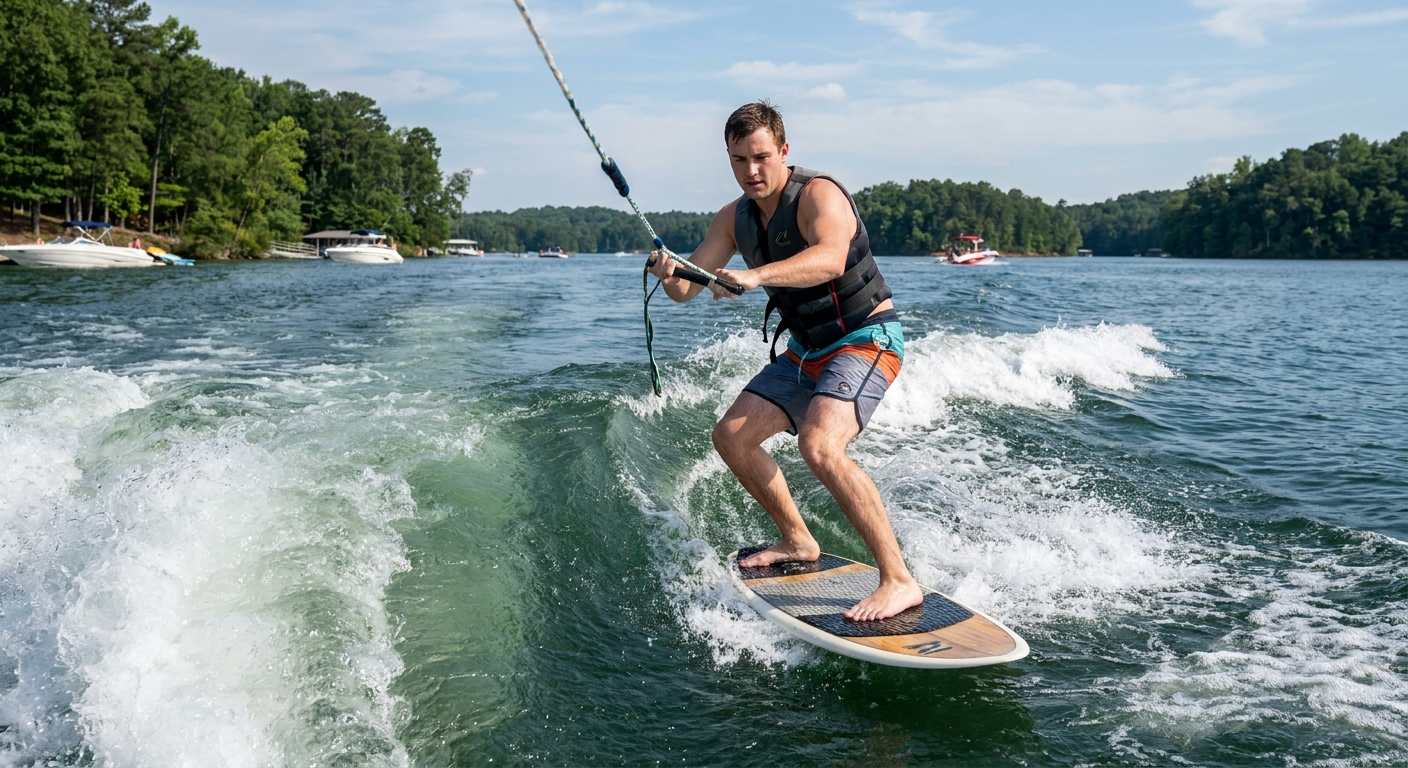
Wake surfing isn't about brute force. It's about letting the wave carry you and making small, intentional adjustments. Beginners who relax and trust the process get up faster than those who try to muscle their way through every fall. One session gives you the foundation. What you do with it after that is up to you. But if you show up ready to learn, willing to fall, and patient enough to let the wake teach you—you'll walk away with more than just a participation trophy. Whether you're interested in private surfing experiences, half-day charter trips, or full-day charter trips on Lake Lanier, you'll discover the benefits of participating in watersports and gain a new skill and a reason to come back.
Ready to Start Your Wake Surf Journey?
We know the thrill of catching your first wave and the satisfaction that comes with every new skill. With our proven track record of getting every first-timer up on the water, you're in good hands from the moment you step on the boat. If you're eager to experience wake surfing for yourself, let's make it happen together. Give us a call at 470-526-8099 or book now to reserve your spot and get out on the water with us.
‹ Back
Recent Posts
-
Can You Learn to Wake Surf in One Session?
September 25, 2026
-
Is Wake Surfing on Lake Lanier Beginner Friendly?
September 11, 2026
-

What To Bring For A Full Day On Lake Lanier
August 28, 2026
-

Why Half Day Charters Are Popular On Lake Lanier
August 14, 2026
-
Can Kids Enjoy A Private Surf Charter On Lake Lanier?
July 31, 2026